A History of Chess
Chaturanga: The Birth of Chess
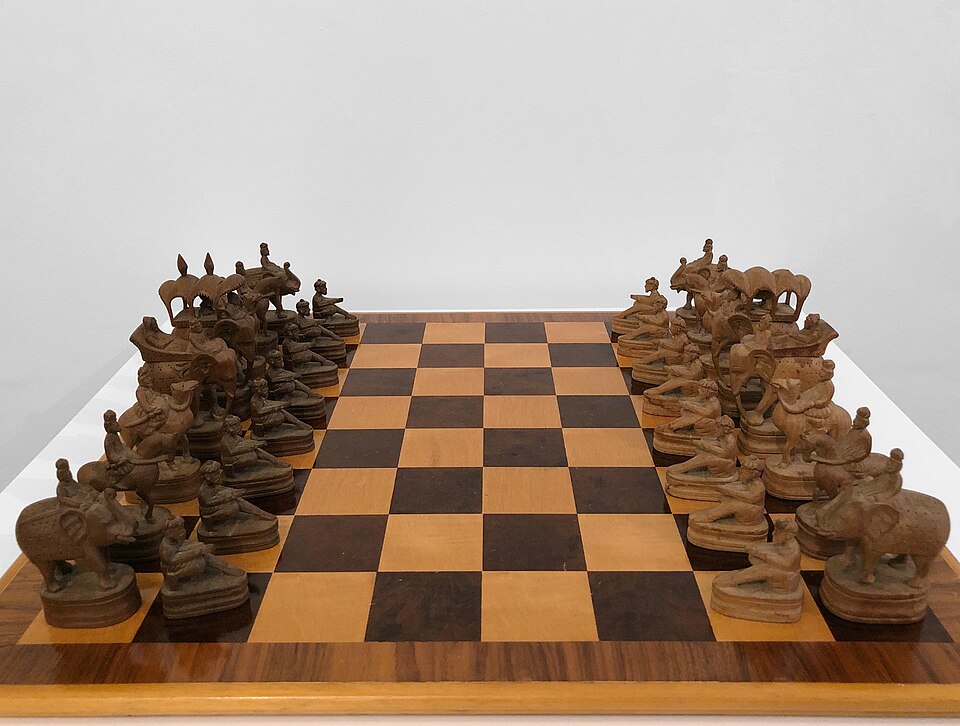
An ancient Indian chess piece, reflecting the game’s origins as chaturanga
The story of chess begins not on the polished boards of European salons, but in the courts and battlefields of 6th-century India. The game we now call chess descends from chaturanga, a Sanskrit word meaning “four divisions”—a reference to the four branches of the Indian military: infantry, cavalry, elephants, and chariots. These divisions mapped directly onto the pieces of the game: the foot soldier (which became the pawn), the horse (the knight), the elephant (the bishop’s ancestor), and the chariot (the rook).
Chaturanga was played on an 8x8 grid called an ashtapada, a board that had existed for centuries as a surface for various race games. What made chaturanga revolutionary was its nature as a pure strategy game—no dice, no element of chance, just two minds in direct competition. The game also featured a king piece, the raja, and a counselor, the mantri, who would later evolve into the most powerful piece on the board: the queen.
The earliest literary references to chaturanga appear in Indian texts from around 600 CE, though some scholars argue the game may be older still. The Vasavadatta, a romance written by Subandhu, contains what may be the earliest known mention of the game, describing the rainy season as a time when “the frogs, yellow and green, appeared like chessmen on the board of the earth.” From these origins in the Gupta Empire, chaturanga spread along the Silk Road, carried by merchants and diplomats into Persia, Central Asia, and beyond.
From Shatranj to the Islamic Golden Age
When chaturanga crossed into Persia, it became shatranj—a phonetic adaptation of the original Sanskrit. The Persians embraced the game with enthusiasm and refined its rules. The earliest Persian text on shatranj, the Chatrang-namak (c. 600 CE), presents the game as a gift from an Indian king to the Persian court, accompanied by a challenge to decipher its rules. According to the legend, the Persian sage Buzurgmihr not only decoded the game but invented backgammon in return.
The Arab conquest of Persia in the 7th century proved to be one of the most consequential events in chess history. Rather than suppressing the game, the Islamic world adopted shatranj wholeheartedly. Chess became a fixture in the courts of caliphs, and the first great chess theorists emerged during the Islamic Golden Age. Al-Adli (c. 800 CE) wrote what is considered the first book on modern chess strategy, covering openings, endgames, and the concept of positional evaluation. His rival as-Suli (c. 880–946) surpassed him, producing analyses so sophisticated that the phrase “to play like as-Suli” remained a compliment in the Arab world for centuries.
Islamic scholars also grappled with the game’s legal status under Sharia law. While gambling was forbidden, chess played without stakes was generally permitted, though debate persisted. The game’s association with intellectual rigour and military strategy lent it respectability. Manuscripts from Baghdad, Cairo, and Cordoba preserved problems and composed positions—mansubat—that challenge solvers to find forced checkmates, a tradition that survives in today’s chess puzzles.
Chess Arrives in Europe
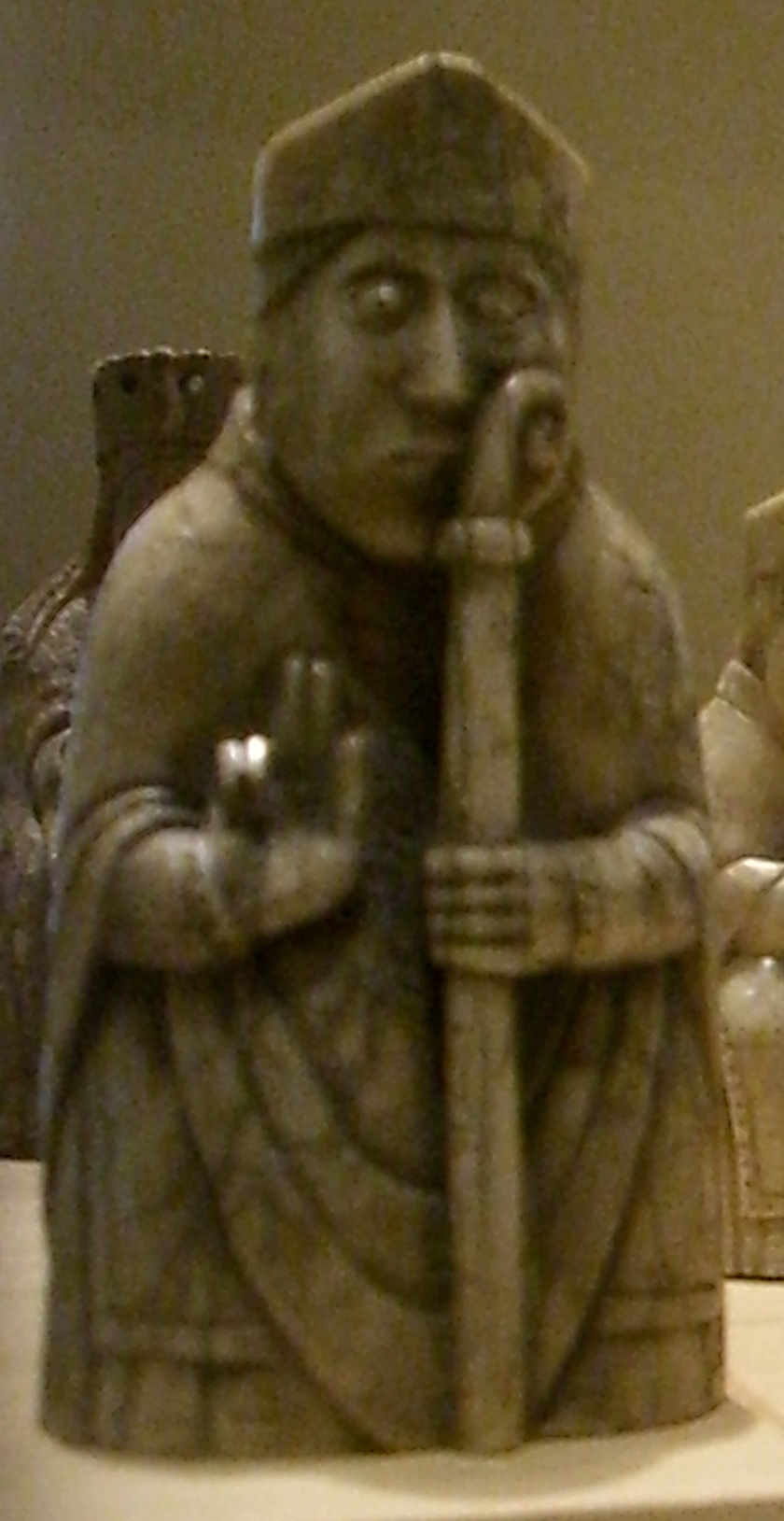
The Lewis Chessmen, carved in the 12th century and discovered on the Isle of Lewis, Scotland
Chess entered Europe through multiple channels. The Moors brought shatranj to the Iberian Peninsula as early as the 8th century, where it took root in the courts of Al-Andalus. Simultaneously, Viking trade routes carried the game northward through Scandinavia and into the British Isles—the famous Lewis Chessmen, discovered on the Isle of Lewis in 1831 and dating to around 1150–1200 CE, provide stunning physical evidence of the game’s reach into the Norse world.
By the 11th and 12th centuries, chess had become an essential accomplishment for European nobility. The game was listed among the seven skills a knight was expected to master, alongside riding, swimming, archery, hawking, verse-writing, and swordplay. Chess metaphors permeated medieval literature: morality plays used the pieces as allegories for social hierarchy, with the king representing the sovereign, the bishops the clergy, and the pawns the common people.
The medieval European game still closely resembled shatranj, with its relatively weak pieces and slow, grinding play. The fers (counselor) could move only one square diagonally, and the elephant moved exactly two squares diagonally, leaping over the intervening square. Games could last for hours or even days, and draws were common. But a revolution was coming—one that would transform chess from a stately, defensive exercise into the dynamic game we know today.
The Birth of Modern Chess
The most dramatic transformation in chess history occurred in the late 15th century, in the courts of Spain and Italy. Around 1475, the rules changed radically: the weak fers was replaced by the queen, a piece that could sweep across the entire board along ranks, files, and diagonals. The elephant became the modern bishop, gaining unlimited diagonal range. Pawns were allowed to advance two squares on their first move, and the en passant rule was introduced to compensate.
This new version of the game was so aggressive compared to its predecessor that contemporaries called it scacchi de la donna—“the chess of the lady”—or, more tellingly, “Mad Queen chess.” The changes likely reflected the cultural prominence of powerful queens in late medieval Europe, including Isabella I of Castile, whose patronage helped spread the reformed game.
The first printed chess book, Luis Ramirez de Lucena’s Repeticion de Amores y Arte de Ajedrez (1497), documented openings and tactics for the new rules. Within decades, the old shatranj-style game had been almost entirely displaced across Europe. The modern game had arrived, and with it came a new era of competitive play. The speed and tactical richness of Mad Queen chess made games shorter, more decisive, and far more exciting to watch and study.
The Romantic Era
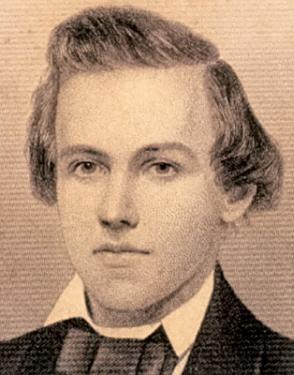
Paul Morphy, the pride and sorrow of chess
Francois-Andre Danican Philidor, Analyse du jeu des Echecs (1749)Pawns are the soul of chess. It is they alone that determine the attack and the defence, and the winning or losing of the game depends entirely on their good or bad arrangement.
The 18th and 19th centuries are remembered as the Romantic Era of chess, a period defined by dashing sacrifices, brilliant combinations, and a belief that attacking play was the highest expression of chess artistry. The first great figure of this era was Francois-Andre Danican Philidor (1726–1795), a French musician and chess master who made the revolutionary claim that “pawns are the soul of chess.” His positional insights were ahead of their time, but the Romantic spirit favoured spectacle over structure.
The cafes of Paris and London became the battlegrounds of informal chess. The Cafe de la Regence in Paris hosted matches between the finest players in the world, while Simpson’s-in-the-Strand served the same purpose in London. It was in these smoky, lamp-lit rooms that the great Romantic players—Adolf Anderssen, Louis Paulsen, and others—played their immortal games.
No figure embodies the Romantic ideal more completely than Paul Morphy (1837–1884), the American prodigy from New Orleans. In 1858, Morphy travelled to Europe and demolished every opponent he faced, playing with a speed, clarity, and combinative brilliance that left contemporaries astonished. His “Opera Game” against the Duke of Brunswick and Count Isouard remains one of the most elegant miniatures ever played. Yet Morphy retired from chess at just 22, never played competitively again, and spent his remaining years in increasing isolation—“the pride and sorrow of chess,” as he was later called.
World Champions and the Classical Era
The era of informal supremacy ended in 1886, when Wilhelm Steinitz defeated Johannes Zukertort in the first official World Chess Championship match. Steinitz was a revolutionary thinker who rejected the Romantic obsession with attack and articulated the principles of positional play: accumulate small advantages, improve your worst-placed piece, and attack only when the position justifies it. He was mocked by contemporaries but vindicated by history.
Steinitz’s successor, Emanuel Lasker, held the title for 27 years (1894–1921), the longest reign in chess history. Lasker was a philosopher and mathematician who brought a psychological dimension to the game, deliberately playing moves that would discomfort his specific opponent rather than seeking objectively “best” moves.
The early 20th century produced a succession of legendary champions. Jose Raul Capablanca, the Cuban “Chess Machine,” played with effortless clarity and was widely considered unbeatable until Alexander Alekhine stunned the world by defeating him in 1927 with deep preparation and ferocious attacking play. The rise of Soviet chess after World War II transformed the game into a state-sponsored enterprise. Botvinnik, Smyslov, Tal, Petrosian, and Spassky—all Soviet champions—dominated world chess for decades, supported by a system of coaches, schools, and tournaments that no other nation could match.
Fischer, Kasparov, and the Cold War
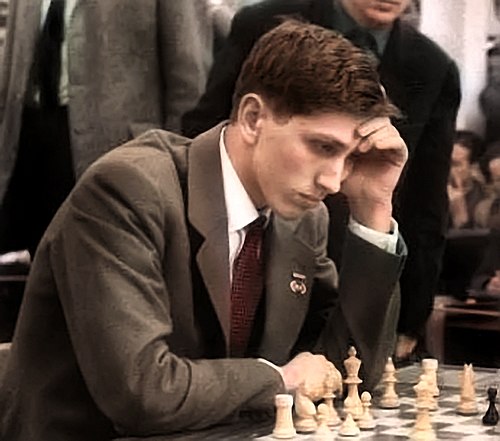
Bobby Fischer vs Boris Spassky, 1972 World Chess Championship in Reykjavik
Fischer vs Spassky, 1972 — Game 6
In 1972, the American Bobby Fischer broke the Soviet stranglehold in what became the most famous chess match in history. The Fischer–Spassky World Championship in Reykjavik, Iceland, was a Cold War proxy battle that captivated millions worldwide. Fischer’s victory was a triumph of individual genius against an entire system, and it sparked a chess boom across the United States. Yet Fischer, like Morphy before him, retreated from public life and never defended his title.
The mantle of greatness passed to Garry Kasparov, who became the youngest-ever world champion in 1985 at the age of 22. Kasparov dominated chess for two decades with a ferocious competitive drive and deep opening preparation. His rivalry with Anatoly Karpov produced some of the greatest matches ever played. But Kasparov’s most famous opponent was not human: in 1997, IBM’s Deep Blue defeated him in a six-game match, marking the first time a reigning world champion lost to a computer under standard time controls—a watershed moment in the history of both chess and artificial intelligence.
The Digital Revolution
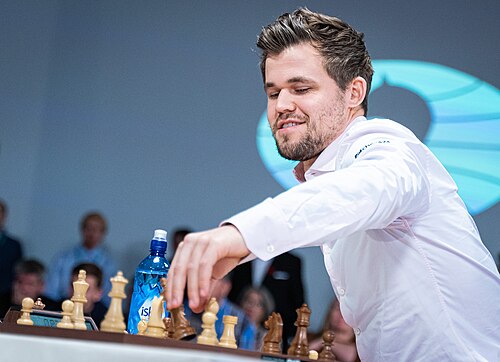
Magnus Carlsen, the highest-rated player in chess history
The 21st century has transformed chess more rapidly than any previous era. Online platforms like Chess.com and Lichess have brought the game to hundreds of millions of players worldwide, while powerful engines like Stockfish and Leela Chess Zero have pushed the frontier of chess understanding far beyond human capability. Today’s top grandmasters routinely use engine analysis in their preparation, and the gap between human and machine play continues to widen.
Magnus Carlsen, the Norwegian prodigy who became world champion in 2013, is widely regarded as the strongest player in history. His peak rating of 2882 is the highest ever achieved, and his ability to grind out wins from seemingly equal positions has earned him comparisons to a “human engine.” Carlsen’s decision to relinquish his classical world championship title in 2023 reflected a broader shift: the centre of gravity in chess is moving toward rapid and blitz formats, online play, and streaming content.
The game has also experienced an unprecedented cultural resurgence. The Netflix series The Queen’s Gambit (2020) introduced chess to a massive new audience, while streamers and content creators on Twitch and YouTube—most notably Hikaru Nakamura and Levy Rozman (GothamChess)—have made chess entertaining and accessible to younger generations. Chess, which has survived for nearly 1,500 years, is more popular today than at any point in its long history. From the courts of the Gupta Empire to the screens of smartphones, the royal game endures.
Backlinks (2)
“We all die. The goal isn’t to live forever, the goal is to create something that will.” — Chuck Palahniuk
Originally the AI suffix stood for archived intellect, however these days it has concretised to becoming an Augmenting Infrastructure — a place from which to branch out in many directions.
Within this site you will find self-contained material in the form of project posts and blog posts, but also external links 1 to other work – my own as well as not.
2. Chess /roam/chess/
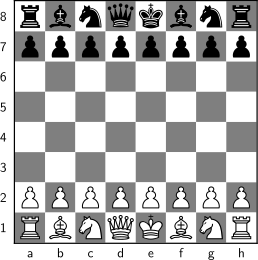
Starting position